
Uriah
The Lamb

Who am I?
The King has called for me by name
from the walls of Rabbah where I
pummel the Ammonites, their fame
a flame dying in the bloody night; a flare
warning enemies of Israel not to dare.

Uriah the Hittite I am called by my brothers
 circumcised as they who love me fast
as I am not like so many others
who have followed not the Lord's path.
They welcomed me into their faith;
I am moved by their warm embrace.

David calls me, humble spear carrier, to speak
of the fight that rolls like a weaver's beam
back and forth, deep fall to peak.
He says, Go home, “bathe my feet”, but it seems
I cannot feast or lie with Batsheva, my wife,
nor make soft talk amidst war's strife.

From the King’s own table gifts of wine and wheat
tempt me not; for at Succot is the ark,
resting in booths in Israel's harsh heat
under the Lord’s heaven, from lit day to dark.
Like a Nazirite I vow, I will not rest
until the Lord’s victory has blessed

the Kingdom of David; and if the faithless fates,
whose unsteady walls I straddle
sling my soul even unto Hades;
if I fall in this hard-fought battle,
my love of the Lord will be reciprocated
with victory by the army of mighty King David.


What is Uriah thinking?

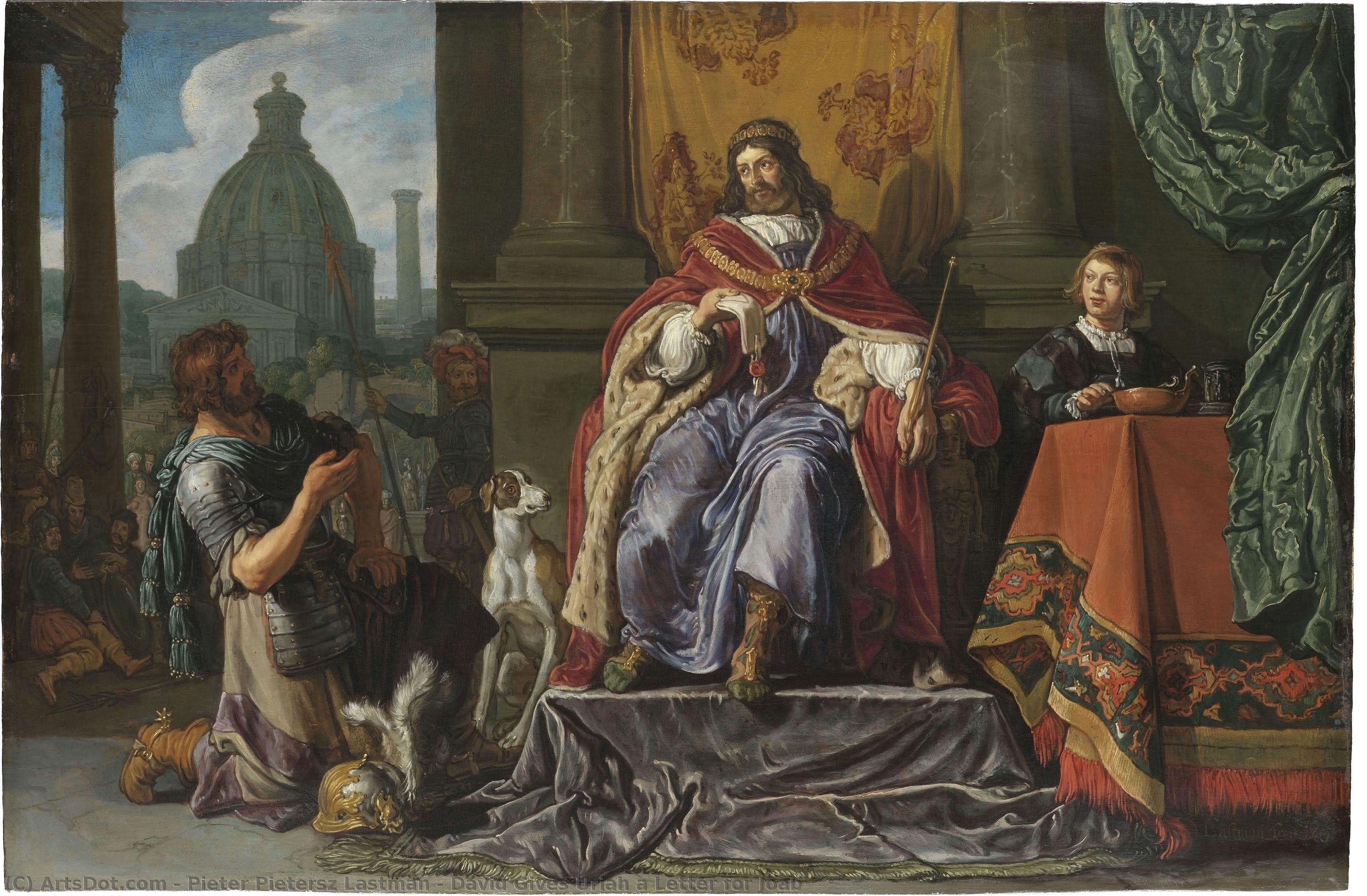
Certainly he believes the King holds him in high esteem to single him out from the front lines to discuss the battle with the Ammonites.  Little does he know that his King had been walking on the roof of his palace while Uriah and his fellow soldiers were in battle, where he saw the beautiful Batsheva, Uriah’s wife, bathing on the roof of her home in a purification ritual after her menstruation.  He sent servants to fetch her and he lay with her in the palace.   (Leonard Cohen immortalized that encounter in his magnificent Hallelujah epic.)  She became pregnant after that encounter and told the King.  He then plotted to bring Uriah home from the front to let him sleep with his wife so that he would think the child was his.  When Uriah refused to succumb to the entreaties of the King, claiming he could not enjoy personal comfort while his fellow soldiers were fighting the King’s own holy battle for the Lord, David sent him back to the front with a sealed letter containing his own death sentence, for King David had told his general Joab to make sure Uriah would be put in a position of extreme danger where he would be killed.   What David did was “evil in the eyes of the Lord” who sent the prophet Nathan to chastise him.  Nathan told the story of a rich man taking the lamb of a poor man to feed a weary traveler because the wealthy man didn’t want to reduce his flock for a stranger, even though he felt obligated to be hospitable to him.  David was outraged at that injustice and promised to make the rich man pay for his cruelty.  Nathan told him, “You are that man!”  David recognized his guilt, accepted his sin and begged the Lord for forgiveness.  Nonetheless, all of this was too late for Uriah, who was killed in a dangerous battle at the walls of the capital city of Rabbah.   The purity of Uriah contrasts sharply with the self serving moral corruption of King David, before David’s acknowledgment and acceptance of his sin.  The Bible, however, does not paint pictures of saints.  What it does do is teach how to be a man even after sinning grievously.   But though the sin may be remitted, the consequences are not and generations may suffer from it, as happened with David, who lost the first child he had with Batsheva as an immediate punishment, and had one of his own sons rise in rebellion against him, demonstrating that the lack of moral discipline  leads to ruin.